Mostrando entradas con la etiqueta us constitution. Mostrar todas las entradas

miércoles, 28 de marzo de 2012

El Plan Cantinflas


Por: Eduardo A. Náter Ramos
Estudiante de University of Illinois en Urbana-Champaign

La sorprendente decisión del PPD sobre participar en el plebiscito de status que se celebrará el próximo 6 de noviembre junto a las elecciones generales, deja boquiabiertos, atónitos y perplejos a muchos. No es por el hecho de que van a participar, sino cómo y por qué lo van a hacer.

Aparentemente, en algún momento de iluminación, el significado de algunas palabras y conceptos políticos cambiaron dentro de la cúpula del PPD. El Senador Alejandro García Padilla y la Junta de Gobierno Popular han decidido defender el status colonial, territorial, mejor conocido como el “ELA”. Y lea bien, esto no es porque creen en el actual status, sino porque esto significa un voto en contra del Gobernador Luis Fortuño.

En entrevista radial, el Senador García Padilla planteó que un voto por el “Sí” en la papeleta plebiscitaria, es un voto por el “No” al Gobernador Fortuño. ¿La papeleta mágicamente cambió? ¿Ahora hay dos papeletas para la gobernación? Para el PPD resulta extremadamente lógico y la respuesta, según ellos, sería un “sí” a ambas. Un plan maestro, “foolproof”, a lo James Bond o Sherlock Holmes.

Creen que diciéndole al Congreso de los Estados Unidos que queremos mantener el “ELA”, que queremos seguir siendo colonia bajo sus poderes plenarios, estarían derrotando al Gobernador Fortuño. Ah, porque también el detalle es que el PPD desea derrotar al Gobernador en las cuatro papeletas. Ya el asunto no es política partidista, es derrotar a una sola persona. Me imagino que bajo esa misma premisa, pronto el PPD estará radicando una petición ante la Comisión Estatal de Elecciones para que en vez de la Palma, el PNP solamente pueda utilizar la imagen de Luis Fortuño y la opción del “No” y la “Estadidad” también estén representadas por su imagen para así completar su magistral plan.

Aquí les clarifico algo a los compatriotas populares. Cuando uno vota, defiende la opción o el concepto que está explícitamente descrito en la papeleta. Cualquiera que pretenda llevar a la gente, a su gente, a votar bajo una opción dándole otro significado, alejado de lo que realmente representa la opción, utiliza la demagogia, la mentira y la desfachatez insinuando que el puertorriqueño es bruto, que no sabe leer y que su mente es fácilmente manipulable. Como pueblo podemos equivocarnos y lo hemos hecho, pero ser brutos, JAMÁS.

Si los puertorriqueños queremos el voto presidencial, la fórmula para votar en el plebiscito es “NO” al status actual y una cruz bajo la Estadidad. Si queremos siete congresistas 100% boricuas que nos representen a nosotros y a los millones de hispanos en el Congreso, la fórmula para votar en el plebiscito es “NO” al status actual y una cruz bajo la Estadidad. Si queremos igualdad en derechos, beneficios y responsabilidades, la fórmula para votar en el plebiscito es “NO” al status actual y una cruz bajo la Estadidad. No se dejen engañar.

Así que mis queridos amigos populares, con ese cuento a otro lado. El Plan Cantinflas donde sí es no y no es sí y ambas son lo mismo pero todo lo contrario, no les va a funcionar. Puerto Rico no se va a dejar coger de lo que no es. Si alguien se ha caracterizado por mentiras, chanchullos y otras andanzas similares, es el Senador García Padilla que aún tiene muchísimo que explicar. Con esas cantinfladas a otro lado porque en el mundo real, el “sí” sigue siendo “sí” y el “no” sigue siendo “no”. Parafraseando una campaña mediática de los 90’s: “¡A Alejandro dile NO!”

miércoles, 21 de marzo de 2012

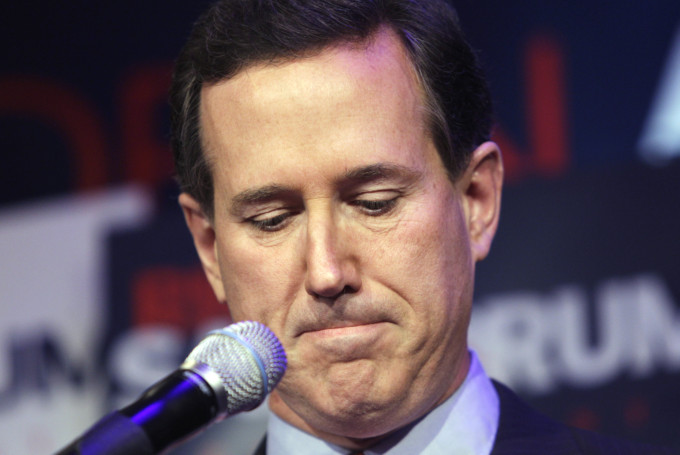
Dear Compay Santorum


Por  Dr. Pablo A. Jiménez

Dear compay Santorum

I write this open letter in response to your recent visit to Puerto Rico. / Escribo esta carta abierta en reacción a su reciente visita a Puerto Rico. Y le escribo de manera bilingüe porque usted no habla español.

In an interview given to a local newspaper, you said: "Like any other state, there has to be compliance with this and any other federal law. And that is that English has to be the principal language. There are other states with more than one language such as Hawaii but to be a state of the United States, English has to be the principal language." / En una entrevista, reseñada en un periódico local, usted dijo:

Your remarks were understood as a insult, summarized in two words: "Learn English". / Sus expresiones fueron interpretadas como un insulto, resumido en dos palabras: "Aprendan inglés".

Let's deconstruct your remarks, shall we? Your observations betray two suppositions: first, that federal law establishes English as the official language of the United States; and, second, that Puerto Ricans do not speak English. / Permítame deconstruir sus expresiones. Sus observaciones delatan dos supuestos: primero, que la ley federal establece el inglés como el idioma oficial de los Estados Unidos; y, segundo, que los puertorriqueños no hablamos inglés.

The problem is that both suppositions are false. On the one hand, the United States has no official language; there is no law establishing English as the official language. On the other hand, most Puerto Ricans speak some English, and millions of us are fully bilingual, speaking both languages with ease. / El problema es que ambos supuestos son falsos. Por un lado, los Estados Unidos no tienen un lenguaje oficial; no hay ley que establezca el inglés como su lenguaje oficial. Por otro lado, la mayor parte de los puertorriqueños habla algo de inglés, y millones de puertorriqueños somos bilingües.


The question is why you made these unfortunate remarks. Did you know your premises are false? If you didn't know, then you spoke out of ignorance. If you did now, then you twisted the truth. One way or the other, your remarks are not worthy of a presidential candidate. / La pregunta es por qué hizo usted estas expresiones tan desafortunadas. ¿Sabía usted que eran falsas? Si no lo sabía, hablo motivado por la ignorancia. Si lo sabía, tergiversó la verdad. De cualquier manera, sus expresiones no son dignas de un candidato presidencial.

I know that you have tried to backtrack, in an effort to explain the unexplainable. But a "clarification" is not an apology, and that is what the people of Puerto Rico deserve. And such an apology should be addressed not only to the 3.7 millions Puerto Ricans who live in the Island, but also to the 3.9 millions who live on the Mainland. / Sé que ha tratado de retractarse, tratando de defender lo indefendible. Empero, una "clarificación" no es una disculpa. Y usted debe pedirles excusas tanto a los 3.7 de millones de puertorriqueños que viven en la Isla como a los 3.9 millones que viven en los Estados Unidos continentales.

Of course, you will not apologize, given that your remarks were addressed to your conservative supporters in the States. Your aim was to throw "red meat" to the extreme right wing of your party. You did not mean to offend Puerto Ricans. You simply used the audience as a prop to demonstrate how conservative you are. / Por supuesto, usted no va a pedir perdón, dado que sus expresiones estaban dirigidas a sus correligionarios conservadores en los Estados Unidos. Su objetivo era complacer a la extrema derecha de su partido. Usted no deseaba ofender al pueblo de Puerto Rico. Simplemente, usted usó a la audiencia como una excusa para hacer alarde de cuán conservador es usted.

Good bye, compay Rick Santorum. Good bye and good riddance. / Adiós, compay Rick Santorum. Adiós y hasta nunca.

¿Qué opina usted? Le invito a compartir su opinión, comentando tanto el contenido de esta columna como los comentarios de otros lectores y de otras lectoras.

El Rev. Dr. Pablo A. Jiménez es el pastor de la Iglesia Cristiana (Discípulos de Cristo) en el Barrio Espinosa de Dorado, PR. http://www.drpablojimenez.com . Publicado Originalmente en El Nuevo Día, el 20 de Marzo de 2012 en la columna de Estilos de vida: Vicios, virtudes y valores. 

lunes, 19 de marzo de 2012

"US Commonwealth of Puerto Rico"


Por Dr. Hernán Padilla
19 de Marzo de 2012

Aunque el nombre de “Estado Libre Asociado” es una contradicción política y jurídica, la Ley Pública 600, la Constitución de Puerto Rico y el “US Commonwealth of Puerto Rico” viabilizan la transición de Puerto Rico a la estadidad.

La Ley Pública 600, aprobada por el Congreso en 1950, autorizó a Puerto Rico a adoptar su propia Constitución para crear un gobierno que rigiera sobre cuestiones locales, al igual que las otras constituciones estatales

El entonces gobernador Luis Muñoz Marín, la Asamblea Constituyente, y el pueblo de Puerto Rico aceptaron las condiciones fundamentales impuestas por el Congreso: (1) que incluyese una carta de derechos; (2) que crease un gobierno de forma republicana; (3) que estuviese de acuerdo y sujeta a las disposiciones de la Constitución de Estados Unidos, y (4) que estuviese de acuerdo con la Ley Pública 600.

La intención primordial de estos requisitos es la de asemejar y hacer viable que todo territorio pueda ser un estado de la Unión en un futuro.

De tal forma, la constitución de un territorio puede permanecer vigente cuando sea admitido como un estado de la Unión, como sería en el caso de Puerto Rico.

Obviamente, la Constitución de Puerto Rico tenía que subordinarse a la Constitución nacional, ya que ésta prevalece y es de mayor rango que cualquier ley o constitución estatal o territorial.

De la misma manera, la Constitución de Puerto Rico cumple con el requisito de ser un territorio organizado políticamente como un estado para poder ser admitido a la Unión.

El Preámbulo de nuestra Constitución sostiene: “Consideramos factores determinantes en nuestra vida la ciudadanía de los Estados Unidos de América y la aspiración a continuamente enriquecer nuestro acervo democrático en el disfrute colectivo de sus derechos y prerrogativas... la lealtad a los postulados de la Constitución federal... la convivencia en Puerto Rico de las dos grandes culturas del hemisferio americano”. Estos postulados son la base del camino hacia la estadidad.

No cabe duda, la Constitución que se aprobó en 1952 es la antesala a la estadidad. En esencia, la comunidad política creada por virtud de la Constitución de Puerto Rico es como un estado no admitido, pero en proceso de ser admitido.

En el 1901 la Corte Suprema de Estados Unidos creó la diferencia entre un “territorio incorporado” en vías de convertirse en estado y otro “no incorporado”, con otras opciones. En el 1922, en el histórico y famoso caso Balzac vs. Porto Rico, la Corte Suprema efectivamente “legisló” que Puerto Rico era un “territorio no incorporado” aunque sus residentes fueran nacionales y ciudadanos americanos”. Por suerte, parece que cuando el Congreso aprobó la Ley 600 y la Constitución de Puerto Rico, tuvo el efecto revocar el caso Balzac “en silencio”.

A pesar de ese desatino jurídico-constitucional, parece que el proceso de Puerto Rico como territorio incorporado comenzó en 1917 a través de la concesión de la ciudadanía americana. Aunque no fue la intención del Congreso cambiar la relación política de Puerto Rico con Estados Unidos, sino meramente disponer sobre su gobierno interno, la Ley 600 y la Constitución del 1952 se convierten en la antesala del “territorio colonial incorporado”  en ruta a la estadidad.

De hecho, durante décadas nos han considerado como si fuéramos un estado llamado “the Commonwealth of Puerto Rico” y nos incluyen en muchos de los programas nacionales, como transportación, agricultura, justicia, ambiente, educación, vivienda, asistencia médica y asistencia nutricional, entre otros.

Por tanto, no podemos negar que la federalización de jure y de facto del “US Commonwealth of Puerto Rico” tratando a Puerto Rico como si fuera territorio nacional incorporado, es otro paso irreversible y el preludio político-jurídico a la estadidad.

martes, 2 de agosto de 2011

President Statement on Budget Control Act

THE PRESIDENT: Good afternoon, everybody. Congress has now approved a compromise to reduce the deficit and avert a default that would have devastated our economy. It was a long and contentious debate. And I want to thank the American people for keeping up the pressure on their elected officials to put politics aside and work together for the good of the country.

This compromise guarantees more than $2 trillion in deficit reduction. It’s an important first step to ensuring that as a nation we live within our means. Yet it also allows us to keep making key investments in things like education and research that lead to new jobs, and assures that we’re not cutting too abruptly while the economy is still fragile.

This is, however, just the first step. This compromise requires that both parties work together on a larger plan to cut the deficit, which is important for the long-term health of our economy. And since you can’t close the deficit with just spending cuts, we’ll need a balanced approach where everything is on the table. Yes, that means making some adjustments to protect health care programs like Medicare so they’re there for future generations. It also means reforming our tax code so that the wealthiest Americans and biggest corporations pay their fair share. And it means getting rid of taxpayer subsidies to oil and gas companies, and tax loopholes that help billionaires pay a lower tax rate than teachers and nurses.

I’ve said it before; I will say it again: We can’t balance the budget on the backs of the very people who have borne the biggest brunt of this recession. We can’t make it tougher for young people to go to college, or ask seniors to pay more for health care, or ask scientists to give up on promising medical research because we couldn’t close a tax shelter for the most fortunate among us. Everyone is going to have to chip in. It’s only fair. That’s the principle I’ll be fighting for during the next phase of this process.

And in the coming months, I’ll continue also to fight for what the American people care most about: new jobs, higher wages and faster economic growth. While Washington has been absorbed in this debate about deficits, people across the country are asking what we can do to help the father looking for work. What are we going to do for the single mom who’s seen her hours cut back at the hospital? What are we going to do to make it easier for businesses to put up that “now hiring” sign?

That’s part of the reason that people are so frustrated with what’s been going on in this town. In the last few months, the economy has already had to absorb an earthquake in Japan, the economic headwinds coming from Europe, the Arab Spring and the [rise] in oil prices -- all of which have been very challenging for the recovery. But these are things we couldn’t control. Our economy didn’t need Washington to come along with a manufactured crisis to make things worse. That was in our hands. It’s pretty likely that the uncertainty surrounding the raising of the debt ceiling -- for both businesses and consumers -- has been unsettling, and just one more impediment to the full recovery that we need. And it was something that we could have avoided entirely.

So, voters may have chosen divided government, but they sure didn’t vote for dysfunctional government. They want us to solve problems. They want us to get this economy growing and adding jobs. And while deficit reduction is part of that agenda, it is not the whole agenda. Growing the economy isn’t just about cutting spending; it’s not about rolling back regulations that protect our air and our water and keep our people safe. That’s not how we’re going to get past this recession. We’re going to have to do more than that.

And that’s why, when Congress gets back from recess, I will urge them to immediately take some steps -- bipartisan, common-sense steps -- that will make a difference; that will create a climate where businesses can hire, where folks have more money in their pockets to spend, where people who are out of work can find good jobs.

We need to begin by extending tax cuts for middle-class families so that you have more money in your paychecks next year. If you’ve got more money in your paycheck, you’re more likely to spend it. And that means small businesses and medium-sized businesses and large businesses will all have more customers. That means they’ll be in a better position to hire.

And while we’re at it, we need to make sure that millions of workers who are still pounding the pavement looking for jobs to support their families are not denied needed unemployment benefits.

Through patent reform, we can cut the red tape that stops too many inventors and entrepreneurs from quickly turning new ideas into thriving businesses -- which holds our whole economy back. And I want Congress to pass a set of trade deals -- deals we’ve already negotiated -- that would help displaced workers looking for new jobs and would allow our businesses to sell more products in countries in Asia and South America, products that are stamped with the words “Made in America.”

We also need to give more opportunities to all those construction workers out there who lost their jobs when the housing boom went bust. We could put them to work right now, by giving loans to private companies that want to repair our roads and our bridges and our airports, rebuilding our infrastructure. We have workers who need jobs and a country that needs rebuilding; an infrastructure bank would help us put them together.

And while we’re on the topic of infrastructure, there’s another stalemate in Congress right now involving our aviation industry which has stalled airport construction projects all around the country and put the jobs of tens of thousands of construction workers and others at risk -– because of politics. It’s another Washington-inflicted wound on America, and Congress needs to break that impasse now –- hopefully before the Senate adjourns -– so these folks can get back to work.

So these are some things that we could be doing right now. There’s no reason for Congress not to send me those bills so I can sign them into law right away as soon as they get back from recess. Both parties share power in Washington, and both parties need to take responsibility for improving this economy. It’s not a Democratic responsibility or a Republican responsibility; it is our collective responsibility as Americans. And I’ll be discussing additional ideas in the weeks ahead to help companies hire, invest and expand.

So, we’ve seen in the past few days that Washington has the ability to focus when there’s a timer ticking down, and when there’s a looming disaster. It shouldn’t take the risk of default -– the risk of economic catastrophe -– to get folks in this town to work together and do their jobs. Because there’s already a quiet crisis going on in the lives of a lot of families, in a lot of communities, all across the country. They’re looking for work, and they have been for a while; or they’re making do with fewer hours or fewer customers; or they’re just trying to make ends meet. That ought to compel Washington to cooperate. That ought to compel Washington to compromise, and it ought to compel Washington to act. That ought to be enough to get all of us in this town to do the jobs we were sent here to do. We’ve got to do everything in our power to grow this economy and put America back to work. That’s what I intend to do, and I’m looking forward to working with Congress to make it happen.

Thanks very much, everybody.

jueves, 28 de julio de 2011

The Temptations of Power is Broader Power

BY ANTHONY MELE
Publish by Rockland County Times

Political power can test the most temperate of people, but when those temptations remain unsatisfied it leads to a need for more of it. The media ignored President Obama when he told the room hosted by The Council of La Raza he felt "tempted” to bypass the US Congress. When the President of the USA expresses his contempt for the US Congress as a co-equal branch of government, he is simultaneously expressing the separation of powers built into the US Constitution is a constraint that frustrates his exercise of power. That is precisely what the founders in their wisdom intended. When he says he is "tempted to go it alone," he is expressing a desire to rule by dictat. That is precisely what the founder’s intended to constrain.

As a former soldier, it disturbed me to my core for the first time in my life to actually hear the Commander in Chief announce he wanted to suspend the separation of powers clause. As an American of Latin heritage, it embarrassed me to hear Latinos chant "yes, you can.” Especially when you take into consideration most of these immigrants and their parents fled from Latin American dictatorships to partake in the freedoms guaranteed by our Constitution.

What rose from simmering incredulousness to furious objection was the pure outlandish lie that if the president had dictatorial powers granted to him by those cheering him on in that room, he would be a beneficent dictator. He would grant them all they wished, like immigration reform, which is left-wing code word for a borderless America. Like balance and fairness from a dictator who would seize the wealth from those who earned it and redistribute to those he says should have it instead.

What became downright frightening was the mob mentality in that room, who would, if they could, at that moment abolish the presidency as a public office in a co-equal branch of government, constrained by the US Constitution, restrained by the Bill of Rights and sustained by the equal protection under the law. They would have anointed him an American Dictator before my very eyes. When I observed his reaction to that possibility, there was no Chris Mathews warm feel up my leg, but a very cold chill ran down my spine.

It is my intention to warn every American why the founders swore an oath to pledge their life, their wealth and sacred honor to declare to a world of Kings, we shall have no Monarchs over a free people. I can do no less than they. Mr. President, the US Constitution is not White House toilet tissue. That is the contempt he expressed for it on this day in July 2011. It is my goal to persuade every voter I can to return the favor come Election Day 2012.