Mostrando entradas con la etiqueta Statehood. Mostrar todas las entradas

miércoles, 21 de marzo de 2012

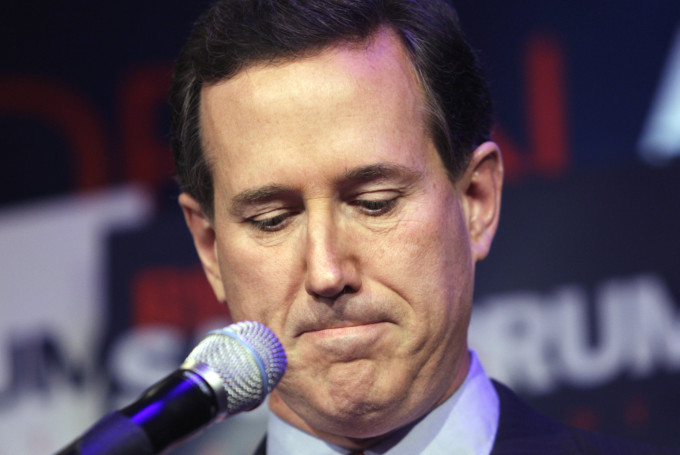
Dear Compay Santorum


Por  Dr. Pablo A. Jiménez

Dear compay Santorum

I write this open letter in response to your recent visit to Puerto Rico. / Escribo esta carta abierta en reacción a su reciente visita a Puerto Rico. Y le escribo de manera bilingüe porque usted no habla español.

In an interview given to a local newspaper, you said: "Like any other state, there has to be compliance with this and any other federal law. And that is that English has to be the principal language. There are other states with more than one language such as Hawaii but to be a state of the United States, English has to be the principal language." / En una entrevista, reseñada en un periódico local, usted dijo:

Your remarks were understood as a insult, summarized in two words: "Learn English". / Sus expresiones fueron interpretadas como un insulto, resumido en dos palabras: "Aprendan inglés".

Let's deconstruct your remarks, shall we? Your observations betray two suppositions: first, that federal law establishes English as the official language of the United States; and, second, that Puerto Ricans do not speak English. / Permítame deconstruir sus expresiones. Sus observaciones delatan dos supuestos: primero, que la ley federal establece el inglés como el idioma oficial de los Estados Unidos; y, segundo, que los puertorriqueños no hablamos inglés.

The problem is that both suppositions are false. On the one hand, the United States has no official language; there is no law establishing English as the official language. On the other hand, most Puerto Ricans speak some English, and millions of us are fully bilingual, speaking both languages with ease. / El problema es que ambos supuestos son falsos. Por un lado, los Estados Unidos no tienen un lenguaje oficial; no hay ley que establezca el inglés como su lenguaje oficial. Por otro lado, la mayor parte de los puertorriqueños habla algo de inglés, y millones de puertorriqueños somos bilingües.


The question is why you made these unfortunate remarks. Did you know your premises are false? If you didn't know, then you spoke out of ignorance. If you did now, then you twisted the truth. One way or the other, your remarks are not worthy of a presidential candidate. / La pregunta es por qué hizo usted estas expresiones tan desafortunadas. ¿Sabía usted que eran falsas? Si no lo sabía, hablo motivado por la ignorancia. Si lo sabía, tergiversó la verdad. De cualquier manera, sus expresiones no son dignas de un candidato presidencial.

I know that you have tried to backtrack, in an effort to explain the unexplainable. But a "clarification" is not an apology, and that is what the people of Puerto Rico deserve. And such an apology should be addressed not only to the 3.7 millions Puerto Ricans who live in the Island, but also to the 3.9 millions who live on the Mainland. / Sé que ha tratado de retractarse, tratando de defender lo indefendible. Empero, una "clarificación" no es una disculpa. Y usted debe pedirles excusas tanto a los 3.7 de millones de puertorriqueños que viven en la Isla como a los 3.9 millones que viven en los Estados Unidos continentales.

Of course, you will not apologize, given that your remarks were addressed to your conservative supporters in the States. Your aim was to throw "red meat" to the extreme right wing of your party. You did not mean to offend Puerto Ricans. You simply used the audience as a prop to demonstrate how conservative you are. / Por supuesto, usted no va a pedir perdón, dado que sus expresiones estaban dirigidas a sus correligionarios conservadores en los Estados Unidos. Su objetivo era complacer a la extrema derecha de su partido. Usted no deseaba ofender al pueblo de Puerto Rico. Simplemente, usted usó a la audiencia como una excusa para hacer alarde de cuán conservador es usted.

Good bye, compay Rick Santorum. Good bye and good riddance. / Adiós, compay Rick Santorum. Adiós y hasta nunca.

¿Qué opina usted? Le invito a compartir su opinión, comentando tanto el contenido de esta columna como los comentarios de otros lectores y de otras lectoras.

El Rev. Dr. Pablo A. Jiménez es el pastor de la Iglesia Cristiana (Discípulos de Cristo) en el Barrio Espinosa de Dorado, PR. http://www.drpablojimenez.com . Publicado Originalmente en El Nuevo Día, el 20 de Marzo de 2012 en la columna de Estilos de vida: Vicios, virtudes y valores. 

domingo, 13 de noviembre de 2011

McClintock remarks at SOMOS Winter Conference 2011

 Keynote remarks
prepared for delivery by
Kenneth D. McClintock
Puerto Rico Secretary of State
SOMOS 2011 Winter Conference
San Juan, Puerto Rico
Veterans Day 2011

Amigas y amigos puertorriqueños... hermanas y hermanos hispanos.  Although I could continue speaking in Spanish, for the benefit of the “culturally-impaired”, I’ll continue in English!

First, I would like to thank SOMOS for their kind invitation… I am very pleased to have been asked to speak at the Puerto Rican/Hispanic Task Force Winter Conference. But I do not want to speak long…

Rather than having you listen to my concerns and my opinions, I would like this to be an opportunity to exchange views… to discuss issues… and to strengthen ties with the members of the larger Hispanic community in New York porque nosotros los puertorriqueños somos solidarios con nuestras hermanas y hermanos hispanos.

I would like this to become more of a town hall meeting than a dinner keynote because a town hall meeting helps to bring together the members of the community, however diverse the community is —and, let’s face it, it’s Friday night and who wants to listen to me talking for forty minutes on end…

Latinos are a diverse group, but whether we are from Mexico, Central America, Cuba, Puerto Rico, the Dominican Republic, or South America, we are bound together not only by our common history and cultural heritage but also by our concerns and interests… by the goals and objectives that we share.

By bringing together the members of the community, we raise awareness about our common concerns and interests and help foster Hispanic leadership in this great Nation of ours.

A town hall is also the seat of local government… and a town hall meeting is perhaps the best example of participatory and representative democracy in America… Therefore, it would be fitting to begin my remarks by talking about an issue that is at the heart of what representative democracy means…

Hispanics are taking an active part in all areas of endeavor and every institution of our democratic society.

Hispanics are having an ever growing influence in the arts and culture, and we are seeing more and more Hispanics in the national media.

Our purchasing power has also been increasing and we are in the marketing plan of every major company in the United States. In 2009, Hispanics accounted for more than 9% of total buying power, compared to less than 4% in 1980. The buying power of Hispanics exceeded $1 trillion in 2010, and the population includes a significant number of high-income households.

We are doing better in business. Hispanics in the United States have been opening businesses at a rate that is three times as fast as the national average. We are driving economic growth and creating jobs.

Make no mistake about it. Immigrants, and the sons and daughters of immigrants, helped to build this great Nation of ours and Hispanics will help to bring this Nation out of recession.

And, more Hispanics become appointed to key positions in the federal government such as the Director of the Office of Intergovernmental Affairs at The White House.

Cecilia Muñoz, the highest-ranking Hispanic in the Executive Office of The President, oversees the Obama Administration’s relationships with state and local governments. She has done an extraordinary job at keeping Puerto Rico issues at the top of the agendas of cabinet members. Not only does she lead and follow-through, but she is also available at all times. And I can tell you from my experience in government that finding all three is not a common sight at that high level.

Had it not been for her, President Obama probably wouyld not have broken last June 14th the 49 and a half year spell of Presidents not visiting Puerto Rico.  While she doesn’t have a pilot’s license, she was certainly the driving force when Air Force One flew over our skies five months ago!

But in the White House, she’s not only in charge of Puerto Rico-related issues although we like to see her that way here, but in charge of relations with all local governments and intergovernmental organizations, such as the National Governors Association, the National Conference of State Legislatures,  the Council of State Governments that I chaired 13 years ago and, among others, two I’m now active in, the National Lieutenant Governors Association as well as the National Association of Secretaries of State.   And they all speak highly of Cecilia.

Other Hispanics providing leadership in the Obama administration come to mind among which are: Ambassador Carlos Pascual, Special Envoy and Coordinator for International Energy Affairs at the State Department; Julissa Reynoso, Deputy Assistant Secretary of State for Western Hemisphere Affairs who was recently appointed as U.S. Ambassador to Paraguay; Anna Gómez, Deputy Assistant Secretary of Commerce for Communications and Information; Bill Ramos, Director of Intergovernmental Affairs at the Office of the Secretary of Commerce; and James Albino, Program Manager at the Office of National AIDS Policy of The White House.

Yet Hispanics, including Puerto Ricans, are still underrepresented in politics.  In the case of Puerto Ricans who live in the Islands it is not a question of under-representation, but rather of lack of representation.

The nearly 4 million American citizens that reside in Puerto Rico… 4 million Latinos… have no proportional or voting representation in the U.S. House of Representatives… no representation whatsoever in the U.S. Senate and no direct participation in the election of the President and Vice President.

While Congress adopts legislation that the American citizens of Puerto Rico must abide, our only representation in Congress is a Resident Commissioner in the House that cannot vote on the floor.  And our only participation in the election of the President is choosing the delegates to the national political party conventions. This is simply undemocratic.

I make no secret of the fact that I favor Puerto Rico becoming a State---if you didn’t get that in the panel discussion this afternoon, you must’ve been on the beach! But this is not about political status preferences or party politics. This goes to the heart of democracy. Let me quote from three lifelong advocates of Puerto Rico’s current political status known as “commonwealth” or “estado libre asociado”.

In February 2002 former Governor Sila Calderón was interviewed by the South Florida Sun-Sentinel about a voting registration drive the Government of Puerto Rico was conducting in the States and which she described as “an effort to empower Puerto Ricans politically so that they can be a voice in the issues that affect them.”

Regarding the situation of Puerto Ricans in the Islands, Governor Calderon said:
We need a solution to this problem of lack of representation.
Which particular solution at this point, I cannot tell you. But it is something we must deal with because there are so many (U.S.) laws that apply to Puerto Rico in which we have no representation and no participation.

Former Governor Aníbal Acevedo Vilá, in his remarks at Harvard University’s John F. Kennedy’s School of Government on April 26th 2002 —he was Resident Commissioner at the time— referred to “the problem of the current democratic asymmetry in the US-Puerto Rico relationship”, recognizing the existence of the same problem: that we have no participation in the decisions that are made in Washington.

Former Governor Rafael Hernández-Colón, published an article in the 1998 July/August edition of Foreign Affairs magazine entitled, “Doing Right by Puerto Rico: Congress Must Act.”  In that article, he made the following assertion: “All factions do agree on the need to end the present undemocratic arrangement, whereby Puerto Rico is subject to the laws of Congress but cannot vote in it [emphasis provided].”

At Harvard, Governor Acevedo Vilá spoke of building a new consensus, but it seems that we are already before a strong one. The current political status is unacceptable and we need to give the people a full self-government choice.

Has Congress lived-up to its responsibility in making possible that choice? No. On three occasions the U.S. Senate had the opportunity to take action on bills passed in the House —in 1998 with H.R. 856; in 2007 with H.R. 900; and in 2010 H.R. 2499— but didn’t.

And because Congress has failed to take action to solve Puerto Rico’s political status problem, Hispanics are losing the opportunity to have a larger and more powerful voice in our Nation’s Capital.  Think of this: if Puerto Rico were a State, Hispanics would have two more Senators and five more Representatives in Congress. And, would immigration reform be held-up in a Congress with a full delegation of Senators and Representatives from Puerto Rico? I don’t think so!

It is not that Congress has failed to give sufficient consideration to this question.  During the last 20 years Congress has devoted a prodigious amount of time to discuss the question Puerto Rico’s political status.  But the time spent on hearings did not translate into a law to provide the American citizens of Puerto Rico the opportunity to choose among status options that are constitutionally sound, politically viable, and involve a full measure of self-government.

In fact, during the one hundred and twelve years after the annexation of Puerto Rico, Congress did not sponsor a single plebiscite to resolve the Islands’ political status.

Let me quote once more from former Governor Hernández Colón’s article in FOREIGN AFFAIRS:
“It is morally unacceptable, unfair, and harmful to Puerto Rico and the United States for Congress to relegate the issue to business as usual —that is, do nothing, wait for a Puerto Rican initiative, play with it for a while but take no action, wait for the next initiative, and repeat the cycle.  Such insensitivity undermines Puerto Rico’s capacity for self-government, inflicts considerable hardship on its society, and drains the U.S. Treasury.”

We could not keep waiting for Congress. That is why the administration of Governor Fortuño has taken action to establish a two-step process by which the people of Puerto Rico can choose a final and permanent political status with full self-government.

The first step will be a referendum to be held on August 12, 2012. Voters will be asked whether they want to maintain the current status under the territorial clause of the U.S. Constitution or whether they prefer a non-territorial option.

If more voters choose a non-territorial option, a plebiscite would take place on the same day as the general election in November 6, 2012, giving voters the three status options recognized by the U.N. General Assembly as full-self-government choices: statehood, independence or free association.

At the heart of this issue is that the founders of this Nation meant for the citizenship of the United States to be a source of equal rights but that four million American citizens who reside in Puerto Rico do not have the same rights as those who live in the States.

If citizenship is to truly be a source of equal rights in America, Puerto Rico’s political status must change. The options are obvious: either the people of Puerto Rico continue to be American citizens with all its rights and responsibilities under statehood or they achieve separate sovereignty be it under complete independence or a compact of free association with the United States.

Some may ask, why am I addressing this? I’ll tell you… Because Puerto Ricans in the States and in the Islands need to stand together…

…because Puerto Ricans in the Islands and Latinos in the States are part of the same fabric…

…because Puerto Rico’s political status problem diminishes the political power of Hispanics in the States.

…and because the voting and representation rights that Puerto Rican’s in the Islands lack underscore the value of the exercising the rights that you have in the States.

To those Puerto Ricans who live in the States; I would like to ask: Do you feel boricua? Of course you do… You don’t feel any less boricua because you can vote.

Los boricuas en la Isla y en los estados ya estamos unidos por la identidad de la cultura; es hora que también estemos unidos por el poder del voto. Y, cuando todos los puertorriqueños —los de aquí y los de allá— tengamos el poder del voto, entonces sí que nadie podrá detenernos.

For now, Puerto Ricans who live in the Islands cannot vote to elect Senators or Representatives to Congress and cannot vote to elect the President but those of you who live in the States can and should vote.

Voting is not an option but a necessary and fundamental part of being a citizen in a democratic society and if you are registered to vote not only are you equipped to further you own goals and objectives… but can also be solidarios with the members of the community to which we belong —con nuestras hermanas y hermanos hispanos.

Can your vote make a difference? The answer is an unequivocal and resounding yes!

History provides many examples of how a single vote changed the course of entire nations.  Let me give you an example. Most of us would not conceive of this country without Texas being a part of it, but Texas may not have been admitted into the Union if it was not because of the vote of a farmer in the backwoods of Switzerland County, Indiana, named Freeman Clark.

On Election Day in 1844 Freeman Clark laid seriously ill in bed. He begged his sons to carry him to the county seat so he could vote for David Kelso, the Democratic candidate for the State Senate. Clark owed him. David Kelso had defended Clark on a murder charge and obtained his acquittal. The old farmer got to vote for Kelso but Clark died on his way back home. Guess what? Kelso won the election by one vote…

In 1844 when the new Indiana Senate convened, Democrats had a majority of one —counting, you guessed it, David Kelso. At that time, State senates had the task of electing the States' delegation to the U.S. Senate. The Indiana Senate Democrats held a caucus where a majority of the party delegation favored a man who would vote against the annexation of Texas if elected to the U.S. Senate. David Kelso refused to vote for the Democratic Party choice and a deadlock resulted between the Democratic and Whig candidates. The impasse continued for days. Finally, Kelso made his move. He proposed a new candidate: Edward A. Hannigan. In his party caucus, Kelso notified his Democratic colleagues he would bolt and vote with the Whigs —thus electing a Whig to the U.S. Senate— unless the Democrats supported Hannigan. The Democrats felt constrained to accept Hannigan who was then elected as U.S. Senator for the State of Indiana by one vote —that of David Kelso.

In 1845, Texas was admitted to the Union as a State by one vote —that of Edward A. Hannigan from Indiana. California too was admitted to the Union by a margin of one vote in 1850.

In the 1960 presidential election, one more vote per precinct in the states of Illinois, Missouri, New Jersey, and Texas may have altered the course of America's modern history by denying John F. Kennedy the presidency and placing Richard Nixon in the White House 8 years earlier.

In 1962, the governors of Maine, Rhode Island, and North Dakota were all elected by a margin of one vote per precinct.

Your vote makes a difference and registering to vote is easy.  What is most exciting is that Latinos are one of the fastest growing ethnic groups in the United States and they have the potential of transforming the electoral landscape of this country next November as the nation elects the next President of the United States.  In fact, many analysts predict that the presidential race in 2011 will turn on how Latinos vote in several key States.

If one vote can change the course of a nation’s history, just imagine the unrealized potential for change as millions of Hispanic men and women cast their votes.

However, Latinos will only realize their true political potential in this democratic society if you are registered to vote and go to polls. Your vote will make a difference in this country next November.

I will not take more time… As I said, I want to listen to your views.  I would like to close by thanking you for this extraordinary opportunity… gracias por la oportunidad de dirigirme a ustedes… and we look forward to strengthening our ties to Latinos in New York as we endeavor to increase and improve the participation of Hispanics in America.¡Juntos podemos alcanzar nuestras metas y juntos triunfaremos!

Ahora me gustaría escuchar sus comentarios y responder a sus preguntas.  Así que los que tengan preguntas o comentarios por favor levanten la mano.

viernes, 5 de agosto de 2011

Puerto Rico: ¿Territorio, Estado, o Nación?

Por Rep. Pedro R. Pierluisi (D-PR at Large)
Comisionado Residente en Washington, D.C.

Columna El Vocero

El eterno problema del estatus de Puerto Rico domina nuestra discusión política. La razón es clara: no tenemos un estatus digno y permanente. Mientras mantengamos el estatus actual continuaremos sumidos en este dilema que nos ha abrumado por muchísimos años, que obstaculiza nuestro desarrollo socio-económico y que nos mantiene enfrascados en una lucha divisoria que en nada beneficia a nuestro pueblo.

El compromiso de ponerle punto final a este dilema tiene que comenzar con aceptar que el estatus actual es el problema y que la única forma de resolverlo es escogiendo un estatus diferente. Nuestro pueblo ha madurado mucho en las pasadas décadas y debemos estar confiados de que los puertorriqueños están preparados para decidir su futuro político con los ojos abiertos, con la verdad de frente y con la esperanza de un mejor porvenir.

Siempre que hablemos de nuestro estatus tenemos que partir de la premisa de que es nuestro pueblo el que debe decidir el destino político de la isla, pues de eso es que se trata el principio de la libre determinación. Por consiguiente, nadie debe cuestionar la validez de cualquier esfuerzo justo y razonable por consultar a nuestro pueblo sobre este trascendental asunto.

Por otro lado, al repasar nuestra historia tenemos que reconocer que desde mediados del siglo pasado hemos tenido tres sectores ideológicos en la isla: los estadolibristas, los estadistas y los independentistas. Es por eso que para que cualquier consulta de estatus sea justa y razonable, ésta debe darle plena oportunidad de expresar su parecer a estos tres sectores de nuestra población. Ahora bien, lo que no puede ser parte de una consulta justa son propuestas engañosas, alternativas irreales o movidas dirigidas a impedir que el pueblo tome su decisión.

El plebiscito propuesto por el Partido Nuevo Progresista provee para que todos en Puerto Rico puedan hacerse sentir. La consulta que proponemos le plantea dos preguntas a nuestro pueblo. Inicialmente le pregunta a nuestros electores si desean que Puerto Rico continúe en su condición política actual de un Estado Libre Asociado sujeto a la Cláusula Territorial de la Constitución de los Estados Unidos o si desean que obtenga un estatus político permanente que no sea colonial o territorial. Y en caso de que la mayoría de los votantes quiera que Puerto Rico obtenga un nuevo estatus, les pide que escojan entre las siguientes alternativas: la Estadidad, la Independencia, o el Estado Libre Asociado fuera de la Cláusula Territorial de la Constitución Federal.

El propósito obvio de la primera pregunta es determinar el nivel de aceptación que tiene en nuestro pueblo el estatus actual. Y es que conforme al principio de la libre determinación nuestro pueblo es quien tiene que decidir si Puerto Rico debe continuar bajo su presente relación con los Estados Unidos.

La segunda pregunta es igualmente pertinente, ya que en el evento de que la mayoría del electorado rechace la condición política actual de la isla es importante saber cuál de las opciones disponibles es la que prefiere nuestro pueblo.

Entonces, ¿por qué el Presidente del Partido Popular Democrático se opone al plebiscito propuesto?

-Porque no está seguro si debe apoyar que Puerto Rico continúe siendo un territorio de los Estados Unidos sujeto a los poderes del Congreso, en donde no tiene voz y voto.

-Porque no está seguro si debe favorecer que el Congreso trate a Puerto Rico como una nación y le permita tener un pacto o tratado de libre asociación con los Estados Unidos.

-Porque unos días reclama que estamos fuera de la Cláusula Territorial de la Constitución Federal y otros días admite que estamos bajo ella.

-Porque algunas veces habla de que hay que desarrollar el Estado Libre Asociado y otras celebra el pacto que supuestamente tenemos con los Estados Unidos desde los años 50.

-Porque un día dice que los Estados Unidos y Puerto Rico son “naciones hermanas” y otro afirma que somos parte de los Estados Unidos.

-Y porque tiene miedo de que la mayoría de nuestro pueblo vaya a rechazar el estatus actual y vaya a abrazar la estadidad.

Pero si algo espera nuestro pueblo de sus líderes, es firmeza y valentía a la hora de tomar decisiones. Jurídica y políticamente Puerto Rico puede continuar siendo un territorio de los Estados Unidos, puede convertirse en el estado 51 de los Estados Unidos, o puede ser una nación independiente o una nación asociada con los Estados Unidos. Ha llegado el momento de que nuestro pueblo le envíe un mensaje claro al Congreso de los Estados Unidos.

En arroz y habichuelas: ¿Qué queremos ser, un territorio, un estado, o una nación? El futuro de Puerto Rico está en nuestras manos.

sábado, 16 de julio de 2011

National Politics and the Road to Equality


By Phillip Arroyo, President of the Young Democrats Association of America- Puerto Rico Chapter


Last week, The Young Republican Federation of America held their 2011 National Convention right here in the crossroads of the caribbean San Juan, Puerto Rico. As a young Puerto Rican - American I must say that I was pleased when I first learned that hundreds of young people from across our nation would be visiting our island, where they would enjoy our beaches, learn our culture, and stimulate our economy.

A day after the convention concluded, As Chairman of the PR Young Democrats, I publicly denounced and expressed how dismayed I was with the Republican Party for having turned their backs on the Puerto Rican people when they opposed the PR Democracy Act H.R. 2499 when it came down for a final vote last year. The bill would have facilitated a self determination process for the four million American citizens of the island. I also expressed the need for the drastic cuts to the Pell grant by the current Republican Congress to be reverted and support for comprehensive Immigration Reform be supported.

Now, I know many may be asking yourselves, wait a minute...Didn’t he just say that he was pleased with the Young Republicans convention taking place on the island? Of course I was; although the chairman of the Young Republicans, Mr. Daniel Ballori and I have very strong political differences at the national level where we have in more than one occasion clashed heads, we do have one common belief that unites us unconditionally..... political Equality.

This brings me to the main topic of this article; which is the importance of Puerto Ricans participating in the national political process. Although, we cannot vote for President of the United States and our sole member of Congress cannot vote on the floor of the US House of Representatives, it is my strong belief that our island's political status dilemma solution rests with increasing political activism within both the Republican and Democratic parties, lobbying issues that are of true importance to our constituents congruent with the respective national parties’ stances and courting Republican and Democratic candidates; only then will those of us who believe in a permanent relationship with the United States will be acting as what we truly are, an integral part of the United States of America.

How many times have we all been confronted with the following question from a fellow friend from the mainland United States: " So, are Republicans or Democrats a majority on the island?" The usual answer from us is, " Um..Well.... In Puerto Rico the political parties are not divided between Republicans and Democrats, it's complicated. Sit down , let me explain.." This will commonly open up to a long and thorough PR history and politics 101 briefing that usually causes more confusion than clarity to the curious person who asked.

Frankly, there should never be any consfusion in anybody's mind, much less any difficulty in explaining the political ambiensce on the island.

In Puerto Rico, the two major political parties are divided between the "New Progressive Party" which advocates for the island to become the 51st state of the union and the "Popular Democratic Party" which advocates for the continuation of the current territorial political status of Puerto Rico. Now, within the "statehood" party there Democrats and Republicans, whereas within the PDP, a significant majority identifies themselves with the Democratic Party.

Notable democratic figures within the statehood movement are Pedro Rossello former Governor of PR (1992-2000), current Secretary of State Kenneth McClintock and current Resident Commissioner Pedro Pierluisi.

Current Governor Luis Fortuño, current Senate President Tomas Rivera Shatz and current House Speaker Jenniffer Gonzalez are all members of the Republican Party. On the PDP side, former Governor Anibal Acevedo Vila, current Senator Eduardo Bhatia and PR Democratic Party Chairman Roberto Prats are democrats. The sole issue that separates NPP and PDP democrats is the century long status debate; yep, you heard correctly, only one issue!

This political reality on the island has created severe divisiveness among the people of Puerto Rico, soley generated by that one issue, which has caused many people to complain that leaders of both the NPP and PDP concentrate too much on the PR political status issue and do not attend to the issues and problems that affect our quality of life. Issues like crime, health, the economy, education, etc. don’t seem to be as important as Puerto Rico’s colonial dilemma. As a statehooder, I am of those that is convinced that the vast majority, if not all political, social and economic problems of PR share one common denominator : Estado Libre Asociado; the current territorial and colonial relationship between the United States and Puerto Rico.

Nonetheless, the common problems that face the American citizens of Puerto Rico do not discriminate in regards to being a statehooder or a pro territory follower. We all have to put up with elevated crime, poor education, limited employment opportunities and a mediocre healthcare system regardless of who or what party is in power. As I always like to say, "There is only so much you can do under the current status quo".

Puerto Rico’s status resolution will be solved when the people of the island begin to participate in the national political process through the Democratic and Republican parties in genuine fashion and in accordance with the liberal or conservative agenda. This way, we will not only be generating a sense of inclusion of the people in the national debate, but we will also generate a true interest of the national parties in courting candidates on the island and expanding their powers. Congressional distribution is based on population, therefore, the island would have the right to at least five (5) members of Congress and two (2) U.S. senators. That’s more than close to twenty five (25) states! This may explain why the Democratic Party consistently supports self determination bills for the island as evidenced in 1998 (http://clerk.house.gov/evs/1998/roll037.xml) and 2010 (http://clerk.house.gov/evs/2010/roll242.xml).

To reinforce my argument it is important to see the history of the political parties in Hawaii and Alaska before entering the union as the 49th and 50th state respectively. The Republican and Democratic parties were the two (2) major parties of the territories of Hawaii and Alaska prior to entering the union. This fact shoots down the theories of those who say "national politics is not important until we become a state" or " la politica de alla, es la de alla y la de aqui es la de aqui".

As a matter of fact, the premier political parties of the U.S. territories of Guam and Virgin islands are the Republican and Democratic parties. None of the before mentioned territories possess a strong statehood movement. Only in Puerto Rico is where resistance to participate in the national political process so apparent even among many in the pro statehood party. Unless this changes, I fear we will continue to wrestle with the political status dilemma for another century and the people will continue to divide, only adding to the island’s already precarious social and political state. In a nutshell, the pro territory democrats will have to explain their contradiction of being democrats, but at the same time opposing the presidential vote and pro statehood democrats will have to start participating more at the national level like Hawaii and Alaska did as a mechanism of entering the union.

-Phillip Arroyo is a 29 year old Democrat. Hailing proudly from the island of enchantment Puerto Rico, USA. He is President of the Young Democrats of America Puerto Rico Chapter. Mr. Arroyo is on record at the United Nations in New York having testified in favor of the decolonization of Puerto Rico and has lobbied in Congress for the same purpose. On February 25th, 2009 he was appointed by the Governor of Puerto Rico to serve as a member of the Executive Juvenile Delinquency Prevention Committee. He is a Law School Student at Catholic University of Puerto Rico.

jueves, 7 de julio de 2011

Economic inequality and its negative effects on society (Part 1)

By : DR. PEDRO ROSSELLÓ / caribbeanbusiness

Edition: July 7, 2011
(This is the first of a three-part series)

"We can have a democratic society, or we can have wealth concentrated in the hands of a few; but we cannot have both." -Louis Brandeis

Recently, CARIBBEAN BUSINESS presented a plan for the economic development of Puerto Rico (June 9). In considering any general plan for economic development, let me suggest a fundamental element that should be included as a pillar of any plan: the issue of inequality.

In our public discourse, we have thoroughly argued the problems that political inequality can generate. At times, we have touched upon the hardships created when social inequality arbitrarily limits citizens' mobility within a society. But we have yet to fully ascertain the threats and challenges that economic inequality could pose for our contemporary society in Puerto Rico.

Economic disparity can be considered one of the greatest impediments to achieving a fair and prosperous society. There is ample empirical evidence and two basic premises driving this theory, the first being that a more equitable society is a better society. Implicit herein is the philosophy that a market economy should be driven not only by crude economic principles, but also by considerations of fairness, justice and care for the social environment.

The second premise is that increasing material economic standards does not always translate into a better quality of life for citizens. Historically, we have equated an increase in economic standards with a "better" life, presupposing that economic growth was the engine of prosperity. But recent studies point to the reality that prosperity through economic growth has all but stopped in the richest countries, and only continues to be an important factor in poor developing countries.

There is extreme economic inequality in our world today. The 400 richest people on the planet possess as much wealth as do the 3 billion in the world with the lowest incomes, who survive on less than $2 per day, per individual. Between 1987 and 1993, the population with an income of less than $1 a day grew by 100 million, reaching a total of 1.3 billion. By the beginning of this 21st century, the concentration of wealth was so unequal that 85% of the world's population represented only 7% of the world's markets.

The most structured index to measure inequality is the Gini coefficient, employed by the United Nations, which ranks countries on a scale from zero (0) [denoting the country with the most equality] to one (1) [denoting the greatest level of inequality].

Using this system, Namibia (0.707) ranks as the country with the highest inequality, while Japan (0.249) shows the greatest level of equality. Latin American and Caribbean nations rank among those with greater inequality: Bolivia, 0.601; Paraguay, 0.589; Colombia, 0.586; Brazil, 0.590; Panama, 0.561; Haiti, 0.592; and the Dominican Republic, 0.516. There is no official metric for Cuba. On the European front, Spain (0.347) and France (0.327) run close to Canada (0.376) and Australia (0.352) in terms of equality, while the Northern European nations of Sweden (0.250), Finland (0.269) and Denmark (0.257) follow right behind Japan as the world's most egalitarian societies.

In the United States we see a significant level of inequality, with a worrisome growth trend. After 1929, when the Gini coefficient was first reported at 0.450, the nation reached its highest level of equality in 1968 (0.386). Since the 1970s, the lowest level of equality was recorded in 2006 (0.470), stabilizing in 2009 (0.468). By 1995, 1% of the U.S. population controlled 47% of the wealth. After that, the government deregulation and free-market policies that existed between 1995 and 1999 allowed 86% of market gains to go to the richest 10%. At the time, just 1% of the population (2.7 million) owned as much wealth as the 100 million Americans with the lowest incomes.

In addition, over the three decades prior to 2000, the average income of American taxpayers went down 7%, while the income of the richest 1% rose by 148%...and the top 0.1% saw their income grow by 343%!

Regarding Puerto Rico, we could be forgiven for thinking that, as the territory with the lowest income per capita and greatest level of unemployment, it would have the greatest level of equality. Not so. In 2006 and 2007, our island had the highest level of inequality under the U.S. flag, with a Gini of 0.536 and 0.544, respectively. By municipality, Mayagüez (0.599) and San Juan (0.582) showed greater inequality; while Bayamón (0.462) and Toa Baja (0.479) showed less.
What effect might these inequities have on the quality of life of our people?
There is a proven correlation between levels of illness and social problems and levels of inequality. For a given level of income, it is better to live in a more egalitarian place. Egalitarian societies tend to be healthier—there is less infant mortality, longer life expectancy and less mental illness. They also report less usage of illicit substances, less incidence of violence, fewer teenage pregnancies, and higher levels of academic achievement. On this last point, it has already been established that academic achievement depends on the equality gradient of a society—the greater the equality, the higher the general level of education.

Conversely, inequality tends to render countries and jurisdictions socially dysfunctional across an entire spectrum of indicators. A quick glance over recent local headlines reveals serious signs of social dysfunction: escalating crime and violence, decreasing academic performance and education levels, and unremitting examples of public- and private-sector corruption.
All these realities point to an undeniable fact: The optimal development of a society is achieved as its citizens become ever more equal. So equality becomes far more than a moral question regarding how to behave as a society; it becomes a practical matter of allowing the most favorable advancement of our people.

What can we do to mitigate this alarming inequality? Which public policies could drive us to achieve greater equality, and therefore greater justice and progress?
We shall address these important questions in our next column.

Rossello v. United States and the Right to Vote for Puerto Rico

By Jo McKeegan / Published July 5, 2011

During a week in which we celebrate the American colonies for seeking independence in large part due to denial of representation in the British parliament, it’s time for us to have a candid conversation about voting rights in our own present day “colonies”, starting with the American territory of Puerto Rico.

Brought in the Inter-American Commission on Human Rights by former governor of Puerto Rico Pedro Rossello, Rossello v. United States addresses the lack of a right to cast a ballot and have such ballots counted in national elections for president and Congress by residents of Puerto Rico. Petitioner Rossello has been disenfranchised, along with all other residents of Puerto Rico, despite his American citizenship, based solely on his area of residence within the United States. Currently, any American moving their residence to Puerto Rico would similarly be disenfranchised. This glaring discrimination against United States citizens living in Puerto Rico cannot be allowed to continue under international law and FairVote fully supports Rossello in his efforts.

The United States government is improperly denying the ability to vote to at least 3.7 million of its citizens in stating that the Resident Commission non-voting member of Congress is sufficient to address Puerto Rico’s needs. It is simply not reasonable to believe that one non-voting representative to Congress is equivalent to two senators, approximately six members of the House of Representatives, and a vote for the president and a vice president. The residents of Puerto Rico are being systematically disenfranchised and relegated to second class citizenship by their own government.

Puerto Rico’s current disenfranchised status is not acceptable. Unemployment in Puerto Rico is over 16% - grotesquely high even in an area where unemployment is always higher than that of the mainland. Residents of Puerto Rico pay the same social security and Medicaid taxes as mainlanders; however, they generally receive about 93% less in Medicaid coverage, something many believe is due to Puerto Rico’s inability to lobby for itself in Congress. Puerto Rico is hemorrhaging over 35,000 people a year and those who do leave are usually the highest educated, highly skilled, young, and Republican. In short, not having a voice at the national level is having a real effect on four million American lives.

Failing to provide basic suffrage rights to Puerto Rico is particularly ironic in a time of way when Puerto Rican Americans serve in our armed services at higher rates than most of our states. Petitioner claims that no other area of the United States suffered so many casualties of war prior to becoming a state as Puerto Rico has, or had more decorated and high ranking service members. Puerto Rican soldiers can be ordered into battle by a Commander in Chief for whom they have no power to vote.


And yet all evidence demonstrates that Puerto Ricans greatly value suffrage rights. Voter turnout in election for governor of Puerto Rico are higher than the gubernatorial election of any governor in the United States. In fact, 81% of the 2.4 million registered voters went to the polls in 2004, and Puerto Ricans make Election Day a holiday for their elections.

Voting rights in other American "colonies" differ. The phrase “the Constitution does not follow the flag” is often tossed around during this conversation to justify the varying levels of right in territories held by the United States. Additionally, “territory” is a broad term. For example, Americans living in American Samoa are U.S. nationals, but not U.S. citizens. The U.S. Virgin Islands require American citizens from the mainland to go through customs. Guam’s constitutional has never been approved by the Unites States Congress. People with residence in any territory, including Guam, the Virgin Islands, the Northern Mariana Islands and American Samoa all have no right to vote for national representatives, in the form of a voting member of Congress or a elector vote for the U.S. President.

The political leaders of an American territory should not have to sue their own country in an international court in order to be heard as full citizens. But the series of cases controlling Puerto Rico’s status are racist (written by the same court as Plessy v. Ferguson) and a national embarrassment. Under the current system, without a right to vote in the national government, the discrimination against American citizens living in its colonies/territories will continue. For that reason, FairVote supports the efforts of Rossello on behalf the 3.7 million disenfranchised Puerto Ricans in his attempt to gain the voting right he is due as an American citizen.

President Obama’s recent visit to Puerto Rico was the first such state visit since one by President John Kennedy, and even that first-in-a-half-century visit was seen by many analysts as primarily a means to raise campaign funds and appeal to Puerto Ricans living in the continental United States. The president's pledge to support the will of Puerto Ricans should they vote on statehood again ("When the people of Puerto Rico make a clear decision, my administration will stand by you.") is welcome—but no substitute for immediately seeking means to address the broader problem of how we treat American citizens living in Puerto Rico.

domingo, 8 de mayo de 2011

Un análisis económico impactante

Por Kenneth D. McClintock Hernández
Secretario de Estado de Puerto Rico

Durante los pasados 40 años, desde que tenía 13 años de edad, he participado en literalmente centenares de foros y conferencias relacionados con el status politico de Puerto Rico, inicialmente como miembro de la audiencia y, en la mayor parte de las ocasiones, como orador o panelista. En la mayor parte de las ocasiones, el contenido es repetitivo o una versión mejorada de esencialmente la misma información o argumentación. La ponencia del doctor Carlos Colón De Armas, “The Economic Aspects of the Political Status of Puerto Rico and other Fallacies”, como panelista junto a mí y otros en un evento en el Congreso auspiciado por el Center for Puerto Rican Equality Advancement (CPREA) fue la excepción a la regla, al presentar datos y análisis que nunca había visto antes.

Aunque la discusión de aspectos económicos tiende a ser árida, compleja y complicada, el profesor Colón De Armas presentó un análisis novel que resultó entendible a más de un centenar de asesores congresionales, puertorriqueños residentes en la Capital federal y otras personas interesadas en el status de Puerto Rico que asistieron al foro.

El análisis prueba, sin lugar a dudas que la Sección 936, lejos de ayudar a Puerto Rico, le hizo un daño severo a nuestra economía que ha frenado el crecimiento económico desde entonces.

Como sabemos, la sección 936 del Código de Rentas Internas federal fue legislada en 1976 para proveer un extraordinario trato contributivo a las ganancias de corporaciones que tenían operaciones de manufactura en Puerto Rico.

Cuando se legisló en 1996 para su gradual eliminación entre 1996 y 2005, el entonces gobernador Pedro Rosselló, el Comisionado Residente y ex-gobernador Carlos Romero Barceló y el Partido Nuevo Progresista fueron acusados de destruir el futuro económico de Puerto Rico por provocar o permitir la eliminación de la Sección 936.

El 3 de mayo, en la Capital federal, el doctor Colón De Armas, con hechos y datos irrefutables probó lo contrario.

PIB/GDP versus PNB/GNP

En español, el Gross Domestic Product (GDP) se traduce a Producto Interno Bruto (PIB) mientras que el Gross National Product (GNP) se traduce a Producto Nacional Bruto (PNB) (no teniendo la palabra “nacional” nada que ver con el status político).

A continuación las definiciones:

Ü El PIB representa el valor de todos los bienes y servicios producidos y vendidos dentro de las fronteras de un país durante un período de tiempo dado.

Ü El PNB representa el valor de todos los bienes y servicios producidos y vendidos por los residentes de un país durante un período de tiempo dado, independientemente de dónde ocurrió la producción.

En otras palabras, el PIB tiene un enfoque geográfico (lo que se produce dentro de las fronteras) y el PNB tiene un enfoque de domicilio (lo que producen los residentes permanentes del país). En Puerto Rico, la gran diferencia es que en el PIB/GDP se incluye lo que producían las llamadas empresas 936, pero en el PNB/GNP no.

Seis años antes de aprobarse la Sección 936, el producto nacional (en este caso “nacional” no tiene nada que ver con el status politico) bruto (PNB/GNP) de Puerto Rico era un saludable 93% del producto interno bruto (PIB/GDP). O sea, el GNP y el GDP de Puerto Rico estaban casi a la par.

Tan pronto se aprobó la Sección 936, el pequeño diferencial de 7% entre uno y otro se fue separando y para el 2010, la diferencia entre el PNB/GNP y el PIB/GDP se había deteriorado de 7% a 35% de diferencia. O sea, se quintuplicó en 40 años. En términos económicos, eso es terrible.

Visto de otra manera, en las tres décadas antes de aprobarse la sección 936, la relación entre el GNP y el GDP fue de 104%, 99% y 93%, un promedio de 99%. Durante las tres décadas siguientes, fue de 76%, 70% y 67%, un promedio de 71%. Noventinueve por ciento versus setentiun porciento, un deterioro de casi 30% entre las 3 décadas antes y las 3 décadas después de aprobarse la Sección 936.

La economía puertorriqueña comenzó a desplomarse con la estrategia económica equivocada de la Sección 936.

¿Creció la economía con la 936?

Numéricamente, nuestro producto bruto nacional per cápita (por persona) creció dramáticamente entre 1970 y el 2010, de $1,729 a $15,930. “¡Wow!”, podría ser la reacción inicial natural. Esa sería la respuesta natural y superficial que promueven los partidarios del status politico actual.

PERO… en 1970 el GNP per cápita para todos los estados de EE.UU. era de tan solo $5,094 y creció a $47,883 en el 2010. En otras palabras, nuestro GNP por persona era un 33.9% del nacional en 1970 ($1,729 aquí versus $5,094 allá) y en el 2010 era un 33.3% del nacional ($15,930 aquí versus $47,883 allá). La Sección 936 que estuvo vigente durante 30 de esos 40 años no hizo absolutamente nada para cerrar la brecha económica entre Puerto Rico y el resto de los Estados Unidos.

El crecimiento económico y la Sección 936

Entre 1948 y 1979, el crecimiento económico promedio del producto bruto nacional de Puerto Rico fue de casi 6% anual.

Tan pronto se aprobó la Sección 936 a finales de 1976 se notó una diferencia, pero fue una diferencia desastrosa. De 1980 al 2010, el crecimiento anual bajó de casi 6% a apenas 1.5% anual. O sea, bajo tres cuartas partes, ya que 1.5% es una cuarta parte de 6%.

“¡Ah, pero el crecimiento de la economía de los Estados Unidos también bajó!” podrían argumentar los partidarios de la colonia.

Es cierto, la economía nacional también bajó, de 3.84% a 2.68%, una reducción de 30 por ciento. Pero una reducción de 30% es mucho menos que una reducción de casi 75%.

Mientras la economía puertorriqueña creció más aceleradamente que la estadounidense en los 30 años antes de entrar en vigor la Sección 936 (5.56% versus 3.84%), fue la economía estadounidense la que creció más aceleradamente que la puertorriqueña durante los 30 años después de aprobarse la Sección 936 (3.68% vs. 1.52%). La Sección 936 frenó el crecimiento económico de Puerto Rico.

¿Puede Puerto Rico cerrar la brecha?

Si Puerto Rico pudiera reestablecer una tasa de crecimiento mayor a la tasa de crecimiento económico del resto de la nación, podemos establecernos como meta igualar el Producto Nacional Bruto (PNB/GNP) per cápita al PNB/GNP per cápita de todos los Estados Unidos.

Por ejemplo, si nuestra tasa de crecimiento fuera de 1.7 puntos porcentuales mayor a la nacional, como lo fue por 30 años hasta que fue alterada por la imposición de la Sección 936, la economía boricua alcanzaría, proporcional a su población, por supuesto, a la estadounidense, en unos 65 años.

Sin embargo, al paso que vamos bajo la relación política actual, en vez de cerrarse la brecha, la economía puertorriqueña se estará alejando más a la de los Estados Unidos.

* * * * * * * * * * * * *

Todos los que creemos en la descolonización debemos agradecer a la CPREA y su presidente, Rafael Rodríguez, el auspicio de paneles como el celebrado en el Congreso el 3 de mayo que, lejos de convertirse en un repetitivo chijí-chijá, ofrece información, data y argumentación de gran valor para Puerto Rico. - KDM

jueves, 14 de abril de 2011

A Short Analytic Overview of the United States And Its Colonies With Special Reference on Puerto Rico

By: Julio Figueroa Nuñez, student of PUCPR Law School and member of PRSSA.


Abstract:

In the following comparative analysis I attempt to show how colonialism skews the semblances of democracy in the United States. When the relationship between the United States and its colonies is considered, the United States’ democratic institutions significantly break down both in meaning and in practical character. Because the colonial subjects lack the basic democratic principles the US promotes throughout the world, understanding colonialism is important if we are to be successful in advancing democracy and other US interests.

Since the United States and its colonies are not considered politically separate countries within a ‘region’ as the “Comparative Political Analysis” question requests, their political and economic “separate and not all-together equal” relationship warrants the omission of a regional comparative analysis in favor of a colonial one.

______________________________________


During the 20th Century, the United States established international institutions designed to serve its interests long after its global prominence is faded. From time to time, powerful nation members of international institutions such as the WTO, World Bank, IMF, NATO, and the UN among others, have used them to promote a particular ideology in the world. From investment and monetary relief to peace-keeping and war, advocates seeking political or economic intervention through international institutions seem to always manage to insert the word democracy and freedom in their pleas. Unfortunately, many countries advocating international intervention on political and economic matters, whether of global benefit or not, have at some point sidestepped essential democratic tenets. Seduced by the advent of territorial and economic expansion, many democracies abandon the principles which they once genuinely stood by and defended.

When the United States expanded its political dominion and territory in acquiring colonial possessions, democratic representation was not extended to their colonial subjects. Thus American imperialism did not spread and strengthen democracy as some wanted to believe; on the contrary, expansion deteriorated the democratic institutions of the United States and limited the freedoms of the new subjects. Hence, one is compelled to ask how can one country declare preeminent war with others on the grounds (among several) to establish for them the freedoms provided by democratic regimes when it deprives those same privileges and rights to its own citizens in its colonies?

To show the moral, political and legal challenges colonial possessions represent to our democratic institutions I will explore the relationship between the United States and its colonies. Several factors in the relationship I will analyze are: the implications of the US colonial relationship with its territories; colonial representation; and culture.

1. Understanding Colonialism

Colonialism is a methodological system of oppression superimposed on the less powerful, historically rationalized by benevolent and patronizing claims of one group of people over another. A showcase of the once rampant pro-colonial fervor that engulfed many Europeans after the “discovery” is exemplified by Jules Harmand, a French proponent of colonialism, when he declared, “The basic legitimation of conquest over native peoples is the conviction of our superiority, not merely our mechanical, economic, and military superiority, but our moral superiority,” (Said, 1993, p. 17). The imperialist fervor was also present in the United States as well. The difference was the hesitation that expansion beyond our continental borders would lead to implications far more costly than their worth. I believe the implications of imperial expansion and how it has atrophied the development of many nations will clearly show why understanding colonialism is still relevant and ought to be important to political scientists.

Traditionally, the United States has invoked democratic principles such as liberty and civil rights around the world as the best possible form of government despite denying those rights to its colonial subjects. Hence, the claim of being the great global proponent of democracy has not always been genuine or true. Our interest in advancing democracy becomes more difficult when we have to account for, for example, our interventions in foreign soils where we have often deposed democratically elected leaders in favor of totalitarian ones. Contradictions such as these show how the pursuit of US global interests and the promotion of democracy would be a hard sell to some. As long as democracy is used as a tool to conquer and oppress peoples and not the tool that can liberate them, US interests will always be more difficult to achieve.

Consider that in 1800 the West claimed to have 55 percent of the world’s territory when in actuality their borders only held about 35 percent in real terms, (Said, 1993, p. 8). The percentage claimed would later grow to 85 percent by 1914 with European claims alone, not counting the emerging American territorial expansion, (Said, 1993, p. 8). Just a few decades before 1914, the United States had claimed several territories: Hawaii, Alaska, The Philippines, Guam, Cuba, Puerto Rico, minor outlying Pacific islands and atolls and later, the Virgin Islands and the Commonwealth of Northern Mariana Islands. Such vast claims of lands by western powers are indicative of the quantity of native peoples from all over the world that have been victimized by colonialism and its consequences. It is therefore no stretch to suggest that vast numbers of nations are still affected by colonization long after their apparent decolonization.

As a system of conquer and control, colonialism imposes on colonial subjects the establishment of institutions that organize their territories in order to secure their “governability.” Because these institutions are almost always established by the conquering metropolis, they bear the characteristics of the metropolis that establishes them thereby creating “patterns of practice” that “affect state behavior” akin to their creators, (Keohane, 2005, p. 8). Thus, institutions established by the metropolis are designed to mold the colony to the colonist political, social, and economic likeness. Hence, the Constitution of Puerto Rico for example, was approved only after it met the Congressional requirement of resembling the US Federal Constitution. The same Congressional requirement has been imposed on other US territories like Guam and the Commonwealth of the Northern Mariana Islands. For reasons I will later explain, I worry that the process of colonial assimilation will lead our territories towards the same dire socio-political and economic consequences many former European colonies are experiencing should they secede from the US.


Colonial institutions are also designed to become what Edward T. Hall calls extension transferences. By extension transferences I mean institutions designed to influence subjects and shape local cultures long after their independence (or after any change to the status quo is made). The institutions established by the colonists have almost always taken the place of the process of colonization through colonial-institutional appropriation by colonial subjects, (Hall, 1981, p. 28). When appropriated culturally, politically, and economically, institutions established by a foreign power would no longer be seen or identified as foreign by the native people. From the way the legal and justice system is set up, to what subjects are taught in schools, all are designed to continue assimilation with or without close supervision from the metropolis.

In Power and Powerlessness: Queiscence and Rebellion in an Appalachian Valley, John Gaventa shows how the ‘foreign power’ assimilates some aspects of the culture only to shape and influence it later. The ‘foreign power’ then proceeds to impose its will by giving its subjects the sense that they have the freedom to participate and the freedom to have a choice when they in fact do not, (Gaventa, 1982, p. 63). In this sense, political and economic decisions in the colonial regime are already made because they are determined by the institutions established by the metropolis. In a sense, colonial subjects play a game not of their choosing with rules not their own. After a few generations, they appropriate and assimilate the game and the rules, and often passively play to serve their determined roles. Colonial institutions thus perpetuate the process of colonization because it shapes the conditions for eventual appropriation of native peoples.

Native appropriation further secures the conditions necessary for neocolonialism to occur should the colony secede. Neo-colonialism is hard to identify because unlike colonialism, the metropolis is seldom visibly involved. As I have alluded to before, many former colonies have fallen victim to institutional extension transference. As such, neo-colonial nations may find it difficult to create the cultural, political and economic stability required to succeed as a nation because colonial institutions have become integral to the political, economical and social framework of the country. Some institutions that are remnants of colonialism become so assimilated into the local institutional apparatus that identifying them becomes hard and making their eradication difficult.

According to Mark Bray, neocolonialism is used to describe “the control of states by external powers despite the formal appearance of constitutional independence,” (Bray, 1993, p. 334). Kwame Nkrumah, first president of Ghana, describes a neo-colony as being a “State which is subject to it is, in theory, independent and has all the outward trappings of international sovereignty. In reality its economic system and thus its political policy is directed from outside,” (Bray, 1993, p. 334). One important difference between colonialism and neocolonialism however, is that under modern colonialism as practiced by the United States, the colonies have access, albeit limited, to political and legal institutions of the metropolis. Under neo-colonialism, exploitation of the powerful over the weak is not always as apparent, and the weak are usually left voiceless as their governments either betrays them or fall powerless against the metropolis. Should the nation under neocolonialism wish to address any grievance, their resources become limited and their claims hard to pursue. Only those willing to know history can bear witness to their painful colonial past and their equally painful neocolonial present.

Because their colonial condition is acknowledged by US law, the limited access to political and legal institutions provides US colonies a space where they can address their grievances. As we shall see in the following section, without adequate representation, the legal and political rights colonies have do not necessarily mean much. Because they have political and economical disadvantages, colonies are often ignored by a Federal government that is not held accountable to its possessions.

2. Colonialism & Representation

When Alexis de Toqueville visited the young US republic in 1831, he was impressed by the advancement of equality and the respect the American people had for democracy. Although he romanticized the US, he nevertheless provides us incite to how the country was then compared to how it is today, (Collins & Makowsky, 1993, p. 55). Today we have a country where people spend tens of millions of dollars in political campaigns that if elected, will only earn them a 400 thousand dollar a year position. Billions are poured every year in campaigns and lobby groups by corporations and organizations seeking to sway or buy the vote of members of Congress. Those are dollars neither the poor or average middle class person has. If the middle class ever ruled the country as Toqueville thought, those days seem long past.

Because of the important role money has in Washington, some analysts frequently argue that gaining access to the governmental decision making process by ordinary citizens and activist groups in the US has become more difficult. If it is true that political access to Washington, D.C. has become more difficult over the years, then imagine the prospects colonies have in gaining any access. For the colonies, gaining even half of the access ordinary citizens and activist groups may have is close to null considering their political and economic disadvantage. By the mere condition of being colonies, no US territory has the same kind of access in Washington, D.C. as States or their residents. The fact they are colonies means they lack real political representation. While it is true US territories can send non-voting delegates to the US House of Representatives (with the exception of the Commonwealth of the Northern Mariana Islands), they seldom have any real effect, (Thornburgh, 2007, p. 30). The amount of money territories have to spend on lobby firms and campaign contributions to make up for the lack of representation has become a very lucrative source of income for many in Washington over the years as well. However, because they do not have voting representation, members of Congress do not have to worry about being accountable to territorial residents or worry about winning elections because territorial residents cannot vote.

Delegates US territories send to Washington, D.C. have the right to speak on the House floor, but cannot vote for any legislation considered there. Instead, delegates rely on the good will of any voting House member willing to help their causes. Territories have to also spend millions of dollars in lobby groups and in campaign contributions to help sway members of Congress to make up for their lack of political power. As mentioned before, the Commonwealth of the Northern Mariana Islands is the only US territory that does not have a delegate in Congress. Instead, it sends a “resident representative” to Washington, D.C. in order to promote “good relations between the federal and territorial governments,” (Thornburgh, 2007, p. 30). Given that there is no significant difference between having a delegate officially represent a territory and having a “resident representative,” one can conclude that territories with no delegates are not missing out on much. Especially considering that all territories, whether they have delegates or not, have to spend millions of dollars on lobbying firms and campaign contributions anyway.

Territories that do have delegates can only send one elected official to represent the territory “at-large.” In the case of Puerto Rico, the largest of all US territories with almost 4 million American citizens, having just one delegate to represent the island defeats the practical purpose of representation in the House. Adding insult to injury is the fact that by virtue of living in a territory, American citizens cannot vote for the President of the United States. The denial of the right to vote for president is usually reserved for those who are either non-citizens or who have committed serious Federal crimes. It is uncanny that US citizens are being denied voting rights or any form of just representation by virtue of residing in a Territory while at the same time the US advocates the virtues of democracy around the world. While colonialism itself is a system of discrimination and exploitation, it is not the only type of discrimination territories endure. In the next section, I discuss the fact that many colonials celebrate their distinct cultures and are often treated unfairly for it. Various groups in the US view their cultural enthusiasm as either a threat or as an expression of contempt towards the US when in fact their culture is one of the few things they have left after surviving colonialism.

3. Colonialism & Culture

In Who Are We? The Challenges to America’s National Identity, Samuel P. Huntington worries about the future cohesion of the US union. In the book he warns of a US identity crisis caused by the threat of immigrants who are failing to assimilate to the dominant Anglo culture. Referring to the Mexican immigration wave, Huntington writes: “As [Mexican] numbers increase, Mexican-Americans feel increasingly comfortable with their own culture and often contemptuous of the American culture, (Huntington, 2004, p. 254). He continues, “They demand recognition of their culture… [and] they increasingly call attention to and celebrate their Hispanic and Mexican past,” (Huntington, 2004, p. 255). He then cites a 1999 report that indicated how the growth of the Mexican and Hispanic community has facilitated their ‘Latinization’ and the affirmation of their heritage, (Huntington, 2004, p. 255). For colonial peoples who were conquered by a foreign super-power (a category Mexican-Americans in the Southern Border States may qualify for in many respects), their heritage, customs and their celebration may be all they have to hold on to.

Through conquest and opportunity, the acquisition of colonial possessions ensured the multi-cultural character of the United States. In many respects, our greatest strength is our multiculturalism. The diversity of cultures almost guarantees the flow of fresh and innovative ideas into our national political discussion. To ask all Americans to disregard their cultural background and assimilate into one, especially when colonial subjects did not have a choice to be part of the culture that conquered them is preposterous and obscene.

Today the United States is invigorated by the Chamorro culture of Guam, the Polynesian culture of American Samoa, the Latin culture of Puerto Rico, and the Afro-Caribbean culture of the Virgin Islands. All these territories mirror American society because they have already been heavily assimilated. The only thing residents of territories have that they can call their own is the unique culture that in essence remains somewhat intact after colonization. Although I understand the concern some have regarding identity and language, for me, being American has always been about ideology and love for our country and its peoples, not about race. The preservation of our unique individuality however, is for me also part of being American. Because I would certainly not rely on Samuel P. Huntington to preserve my distinct cultural character as a Puerto Rican, it is up to me and others to do so. Preserving a cultural distinction and celebrating it does not mean a lack of love, contempt, or disinterest for the rest of the US as some seem to believe.

Colonization has also brought us to a place where there is no way back because there is no past to go back to. Puerto Rico for example, has never been an independent country in its more than 500 years of ‘discovery.’ In the more than 100 years under US colonial rule, Puerto Ricans have become a hybrid culture of Latin and Anglo customs. Never fully included to either culture, but never fully excluded. They talk Spanish, English, and some even speak Spanglish. And yet they preserve their heritage wherever in the US (and the world) they choose to settle. Aurora Levins Morales expressed the Puerto Rican experience in her poem Child of the Americas:

I am not African. Africa is in me, but I cannot return.
I am not Taina. Taino is in me, but there is no way back.
I am not European. Europe lives in me, but I have no home there.
I am new. History made me. My first language was spanglish.
I was born at the crossroads
And I am whole, (Levins Morales, 1995, p. 79).

I would hope Samuel P. Huntington would agree that if there is any culture that has genuinely struggled with an identity problem, it has been US colonial peoples such as Puerto Ricans. With no political representation, a limited political voice, and often falling victim to Congressional neglect, US colonies continue to develop the chunk of culture that has survived the colonial experience. Their cultures have survived not only by virtue of their geographical distance from the metropolis, but by virtue of their will to not be totally ‘disappeared’ by assimilation.

4. Colonialism and the Future

In Who Rules America? Power, Politics, & Social Change, G. William Domhoff provides an analytical critique on power in the United States. In the book, Domhoff asks the reader to consider three questions: Who benefits? Who Governs? and, Who wins? (Domhoff, 2006, p. 13). While one must acknowledge that there is no singular answer for these questions, it is clear colonial peoples are not the ones who benefit, govern, or win within the US colonial system. As a colonial subject, I have witnessed how interest groups, politicians, and corporations often work to keep the status quo intact. Colonialism itself has become quite a lucrative enterprise for the few at the expense of the many.

While I believe they should not be absolved from any responsibility, these interest groups, misguided politicians, and corporations are not solely to blame for our ills or our colonial condition. I have come to the realization that there are institutions that provide the right environment that allow special interest groups, politicians, and corporations to become the kinds of problems Domhoff describes and that also perpetuate our colonial condition. Like the other US territories, my island of Puerto Rico remains a conquered land, paradoxically, out of apparent choice. After 500 years, Puerto Rico remains the oldest colony in the world. For over 100 years the island has been a US colony. For 50 years of the 100 years, Puerto Ricans have ‘chosen’ to remain a colony. But the reality is that the system is set up so territories like Puerto Rico think they have the option to choose to remain colonies or change if they wish, when in fact they do not. However, results of plebiscites and referendums always seem to favor contented colonial subservience. Not surprisingly, these results are used by members of Congress as convenient pretexts to take no action at all.

US territories also face the increasing difficulty of trying to find their place inside the US Federal system (being part of the nation and at the same time preserving their distinct culture from the rest of the country). Their lack of political power, among the many colonial disadvantages I have mentioned throughout the essay, makes them easy targets for prejudiced and misguided groups. Without equal and just representation, territories are left almost defenseless against groups pushing for the complete assimilation of their cultures and the eradication of their languages.

On the other hand, the burden of possessing colonial territories has come at a very high price for the US; costly for its democracy, and for its global credibility. The unresolved colonial relationship, primarily the Constitutional challenges of citizenship without representation shows colonialism’s incompatibility with the US democratic system. With the acquisition of overseas territories in 1898, the US departed from its practice of incorporating territories and instead experimented with various forms of colonial arrangements. Territories such as the Philippines and Cuba were prepared for independence. Other overseas territories were prepared for statehood as in the case of Hawaii, while others sadly became neo-colonies like the islands of Palau and Micronesia. Others like Guam and Puerto Rico remain ‘unincorporated’ US possessions whose citizens are Americans by birth.

It seems clear that the need to make other arrangements is long overdue. Without Congressional action, colonies are left to have apparent choices between false alternatives for a future already determined by colonialism. Establishing the right to vote in Federal elections, and providing delegates with voting rights in the House of Representatives would be a step in the right direction. To provide colonies the means to defend themselves against those who do not serve their interests, is to provide them the means to preserve their cultures while also ensuring their engagement in the national political discussion. A real process of decolonization by providing the territories the means to engage the national body politic would undoubtedly give the US the opportunity to reestablish its dignity and the dignity of its colonial subjects – a dignity that both lost during the colonial experience.


Cited Works
Bray, M. (1993) Education and the Vestiges of Colonialism: Self-Determination,
Neocolonialism and Dependency in the South Pacific. Comparative Education. Vol. 29, No. 3. retrieved 29 September 2007 from JSTOR from http://links.jstor.org/sici?sici 03050068%281993% 2929% 3A3%3C333%3AEATVOC%3E2.0.CO%3V2-7
Collins R. & Makowsky M. (1993) The Last Gentleman: Alexis de Toqueville. The Discovery of
Society. Fifth Edition. New York: McGraw-Hill, Inc.
Domhoff, G. W. (2006) Who Rules America? Power, Politics, & Social Change. Fifth Edtion.
Boston: McGraw-Hill.
Gaventa, J. (1982) Power and Powerlessness: Quiescence and Rebellion in an Appalachian
Valley. Chicago: University of Illinois Press.
Hall, E. T. (1989) Beyond Culture. New York: Anchor Books.
Huntington, S. P. (2004) Who Are We? The Challenges of America’s National Identity. New
York: Simon & Schuster Paperbacks.
Keohane, R. O. (2005) After Hegemony: Cooperation and Discord in the World Political
Economy. Princeton: Princeton University Press.
Levins Morales, A. (1995) Child of the Americas. Boricuas: Influential Puerto Rican Writings
– An Anthology. Edited by Roberto Santiago. New York: The Random House Publishing Group.
Thornburgh, D. (2007) Puerto Rico’s Future: A Time to Decide. Washington, D.C.: Center for
Strategic and International Studies Press.
Said, E. W. (1993) Culture and Imperialism. New York: Vintage Books